

13 Simple Things You Can Do in February to Support Pollinators
February feels quiet in the garden. The ground rests. The beds look bare. The birds visit feeders and the wind moves through dry stems. Pollinators are still here. They are tucked into leaves, hollow stems, fallen wood, and the soil itself. Queen bumblebees wait below the surface. Native bees shelter in plant debris. Moths and butterflies overwinter in brush piles. What you do this month shapes what wakes up healthy in spring.
February support is not flashy. It is mostly about restraint. You protect habitat instead of clearing it. You plan instead of rushing. These small choices matter because early spring is the hardest time for pollinators. Food is scarce. Shelter is limited. Cold snaps still hit. A gentle February sets the stage for a stronger March and April.
(This blog post is specifically geared towards USA climates.)
1. Leave the Leaves Right Where They Are
Leaf litter is winter housing. Native bees nest in curled leaves. Moths and butterflies shelter in dry debris. When you clear beds in February, you remove insulation and expose insects to freezing nights. Let leaves sit until daytime temperatures stay above 50 °F for ~3 weeks. If your space needs some order, move leaves to the edges of beds or under shrubs. You keep habitat without creating a mess. This single habit protects hundreds of insects you never see.
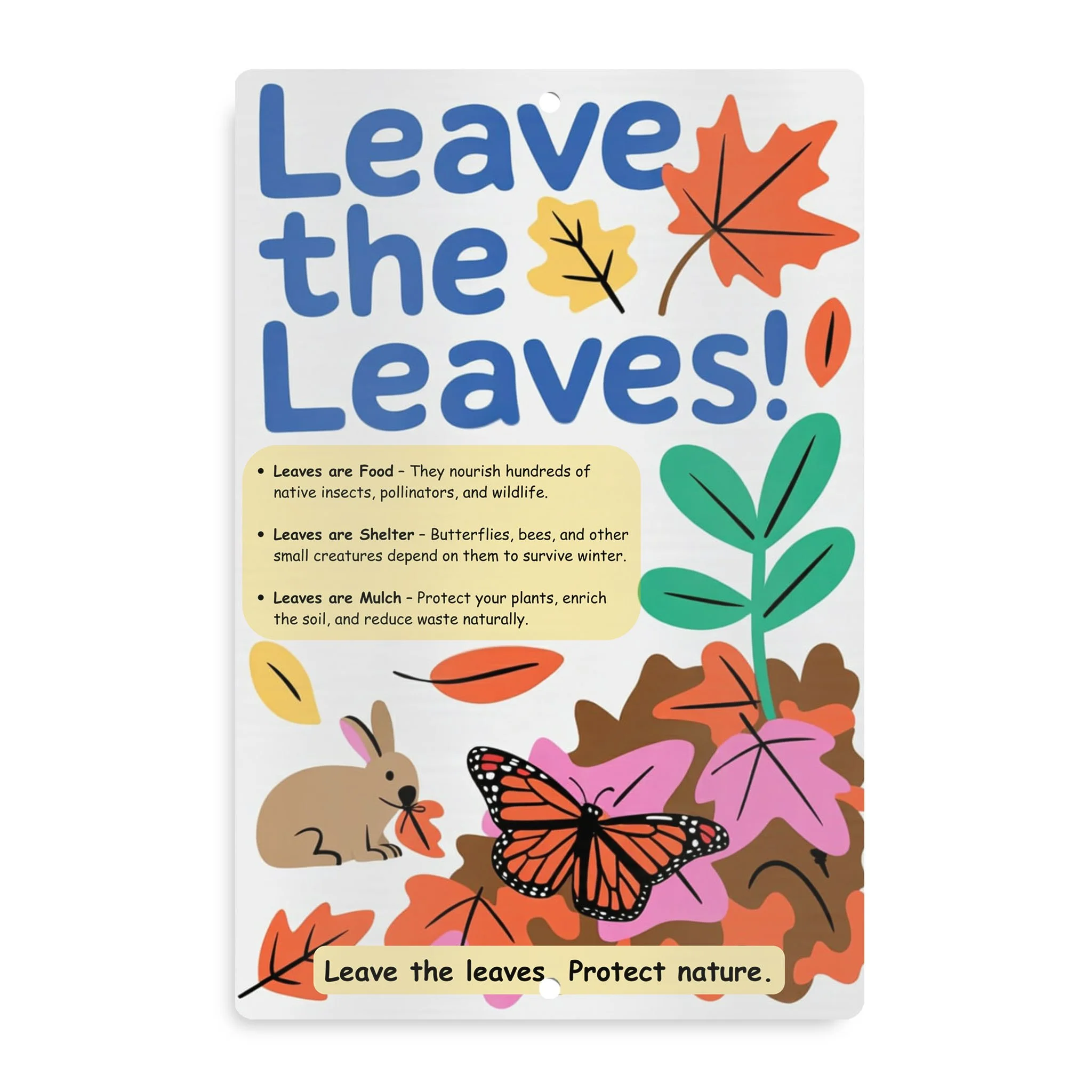
Show your commitment to nature with this beautifully illustrated Leave The Leaves garden sign. Designed with a monarch butterfly, a bunny, and fallen leaves, this high quality 8x12" aluminum sign (with two pre-drilled holes) is a reminder that your home is a safe haven for pollinators of all kinds.
Made from weather-resistant metal with rounded corners and pre-drilled holes, it’s a perfect addition for displaying in flower beds, native plant gardens, community spaces, or nature trails. Whether you’re supporting bees, butterflies, or biodiversity in general, this sign adds purpose and personality to your outdoor space. It is the perfect addition to your garden.
Hardware is NOT included, but inexpensive and easy to obtain at your local hardware store.
Please allow 14 days (2 weeks) for delivery. Made in USA. This product is made for you as soon as you place an order, which is why it takes us a bit longer to deliver it to you. Thank you for making thoughtful purchasing decisions!
2. Keep Stems Standing
Dead stems look lifeless, except they are not. Many native bees lay eggs inside hollow stems. Larvae develop there through winter. Cut perennials back to about 7-12” tall if you want a tidy look. Leave those short stems in place. They still serve as nesting tubes and markers for new growth. Full cleanup can wait until late spring when new shoots push up.
3. Delay Pruning on Early Bloomers
Early flowering shrubs feed pollinators when little else blooms. Lilac, forsythia, redbud, and viburnum form buds on old wood. Pruning now removes spring nectar before insects even wake up. Delay pruning until after bloom. If a branch blocks a path or rubs a window, trim only what is needed. Keep the rest intact. Those early flowers become the first fuel stations of the year.
4. Protect Soil Nesters
A large share of native bees nest in the ground. Thick mulch and landscape fabric block access to soil. Clear a few small patches of mulch to expose bare ground. Each patch can be about 1 ft. Place them in sunny, well drained spots. These simple openings become nesting sites. They look plain but support real life cycles.
5. Build a Small Brush Pile
A brush pile offers cover from wind and predators. Stack sticks and twigs in a loose pile about 25-35” wide. Place it near a hedge or fence line. Insects shelter inside. Birds forage through it. Over time, the pile breaks down into soil food. You can refresh it each year with pruning scraps. It costs nothing and adds structure to your yard.
6. Add Shallow Water
Pollinators need water when days warm. Create a shallow dish with pebbles so insects can land without drowning. Keep water depth under 1”. Place it in a sunny, wind sheltered spot. Refresh the water every few days once temperatures rise. In dry regions, this becomes a critical resource in late winter and early spring.
7. Plan for Continuous Bloom
February is planning season. Choose native plants that bloom from early spring through fall. Aim for early bloomers, summer staples, and fall finishers. This gives pollinators steady food. Look for plants native to your state or region. Native plants evolved with local insects. They provide the right nectar, pollen, and structure. Sketch your layout now so planting feels simple when the soil warms.
8. Cold Stratify Native Seeds
Some native seeds need cold exposure to sprout. You can mimic winter in your fridge. Mix seeds with slightly damp sand in a sealed bag. Store at 32-40°F for 30-60 days. Check moisture weekly. This step improves germination for many wildflowers. When spring arrives, you will have seedlings ready instead of bare soil.
9. Reduce Chemicals Before Spring
February is the right time to reset habits. Clear old pesticide products from your shed. Commit to mechanical and organic methods this year. Healthy gardens rely on balance. Many insects you label as pests feed birds and beneficial predators. Systemic chemicals harm pollinators long after application. A chemical free yard supports stronger populations by default.
10. Add Simple Natural Shelter
Logs, stones, and bark slabs create micro habitats. Place flat stones where sun hits. Insects warm up there on cool mornings. Set a short log section at the garden edge. These features hold moisture and shelter small life. They also add texture and interest to your space without extra cost.
11. Support Pollinators Indoors
Late winter can feel long. You can still support pollinators from inside. Start native seedlings under lights. Clean and prepare tools so you avoid rushed spring work. Learn which plants in your area bloom first so you can protect them outdoors. Indoor prep leads to calmer spring planting, which reduces mistakes that harm habitat.
12. Buy Pollinator Safe Plants and Seeds
When you shop for plants, choose growers who avoid systemic pesticides. Ask how plants are treated before sale. Treated plants can harm pollinators even if you never spray your yard. Seeds grown with care support healthier ecosystems. Your buying choices shape how plants are produced. That influence matters.
13. Normalize Gentle Winter Gardens
Your yard affects your block. When neighbors see leaves and stems left standing, it can feel unfamiliar. Share why you leave them. Explain that winter gardens protect bees and butterflies. Offer extra native seedlings in spring. These small conversations change norms. When more yards support pollinators, entire neighborhoods benefit.
A One Weekend February Pollinator Plan
Take one slow walk around your yard. Notice where leaves and stems still stand. Decide what to leave.
Build one small brush pile in a quiet corner.
Set out one shallow water dish with pebbles.
Clear two small soil patches for ground nesters.
Sketch a simple planting plan with native blooms across seasons.
Start cold stratifying one packet of native seeds.
Remove chemical products you do not plan to use.
This plan takes less than two hours. The impact lasts all year.
February support is about patience. You protect what already lives in your space. You prepare food and shelter for what arrives next. Spring looks brighter when winter gets respect. Pollinators do not need perfection. They need safe places to rest, clean water, and steady food. These quiet choices give them exactly that.