

8 Ways to Support Wildlife ( Even When the Ground Is Frozen)
Winter’s snow and ice can make life challenging not just for people, but for local ecosystems. Many wildlife species face scarce food and frozen water, while common human practices like salting roads can inadvertently harm soil and waterways. In fact, North America has lost more than 1 in 4 birds since 1970 (nearly 3 billion birds), and scientists warn that about 40% of insect species are in decline. Adopting wildlife-friendly winter habits can help turn the tide. Below are eight research-backed ways individuals can support the environment during winter – all sourced from U.S. scientific and governmental experts – followed by a brief conclusion encouraging responsible, restorative winter habits.
The Environmental Risks of Common De-icing Salts
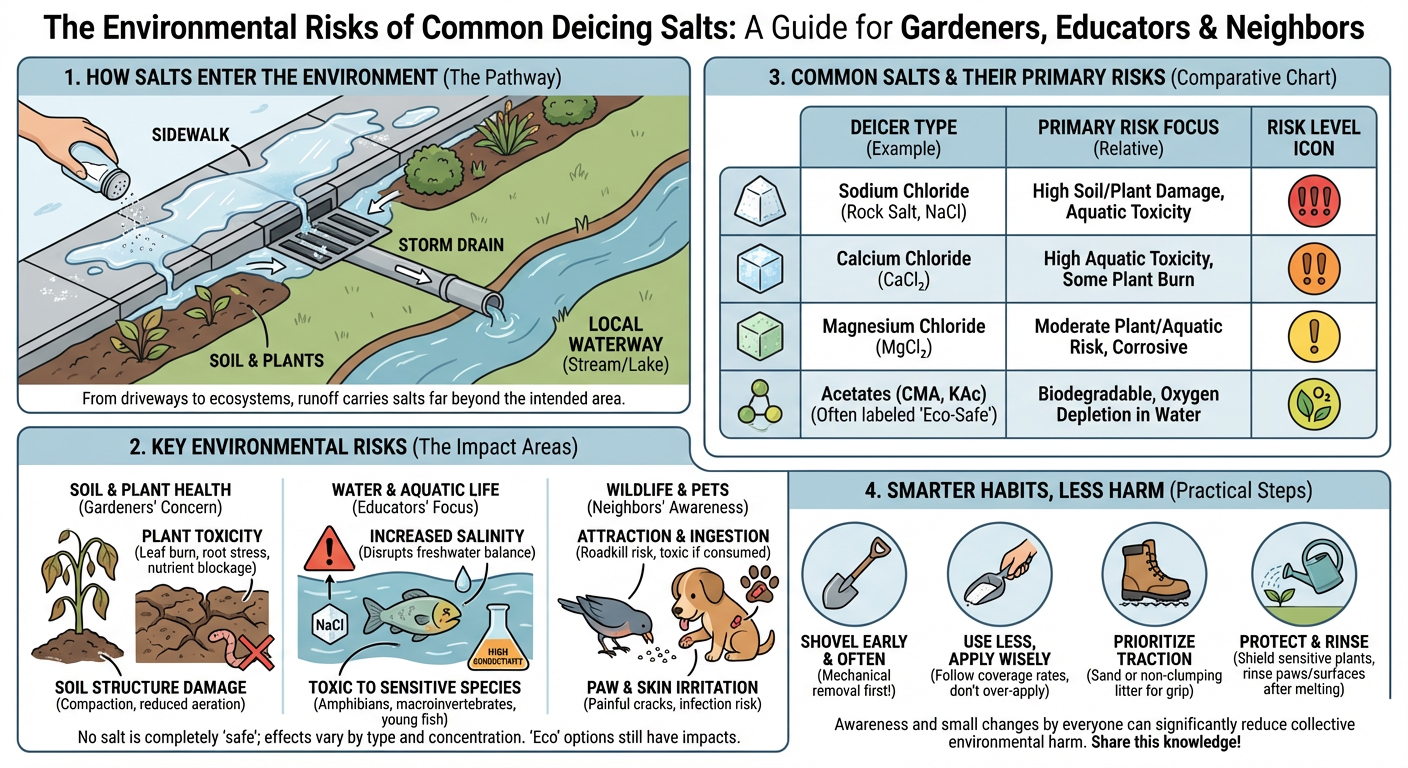
Rock salt (sodium chloride) is the go-to de-icer for slick winter roads and sidewalks, but its environmental downsides are severe. When snow and ice melt, salt-laden runoff pollutes soil and water. Sodium chloride can contaminate drinking water, kill or endanger wildlife, increase soil erosion, and damage vegetation and infrastructure. Once dissolved, chloride from road salt is nearly impossible to remove and accumulates in streams and lakes, where high concentrations are toxic to fish, aquatic insects, and amphibians. Just one teaspoon of salt can pollute five gallons of water. On land, de-icing salt harms plants by causing dehydration and “burning” of foliage; salt absorbed by roots makes it hard for plants to take up water, often browning evergreen needles and killing roadside vegetation. Soil structure and fertility also suffer – excess sodium causes clay soils to compact, reducing infiltration and harming soil microbes and beneficial organisms. Wildlife are not spared: birds can be poisoned by ingesting salt crystals, and large mammals like deer are lured to salty roadsides only to face traffic collisions. These facts highlight that conventional road salt’s “cheap” convenience comes at a high ecological cost.
Safer Alternatives to Harmful De-icing Products
Given salt’s toll, it’s crucial to seek out eco-friendlier ways to keep walkways safe. One strategy is using alternative de-icers that are less damaging than plain sodium chloride. For example, calcium chloride or magnesium chloride can melt ice at lower temperatures and are gentler on plants – though they should still be used sparingly. Another option is calcium magnesium acetate (CMA), a salt-free de-icer derived from acetic acid that won’t add chloride to waterways. Many “pet-safe” or environmentally friendly ice melts use CMA or similar formulations. For simple traction on icy paths, sand or clean kitty litter can be spread – these won’t melt ice but improve footing and contain no chemicals. (Just sweep up residual sand in spring to prevent it from clogging drains or smothering aquatic habitats.) Some public works departments now add biodegradable additives like beet juice, molasses, or even pickle brine to salt brine before storms, which lowers the freezing point further and helps salt stick to pavement so less is needed. You can also pre-treat surfaces with brine (23% salt water) before snow falls – a practice used in states like Rhode Island – to prevent ice bonding and significantly cut down the total salt required. Most importantly, use de-icers only where truly needed and in proper amounts. Shoveling snow promptly is the best first step to avoid ice buildup. If you do use salt, apply it sparingly (for example, about a coffee mug’s worth for 10 sidewalk squares) and sweep up any excess grains after the ice melts to reuse later. Choosing safer products and smart practices keeps walkways safe while minimizing damage to soil and water.
“Leave the Leaves” for Insects and Soil Health
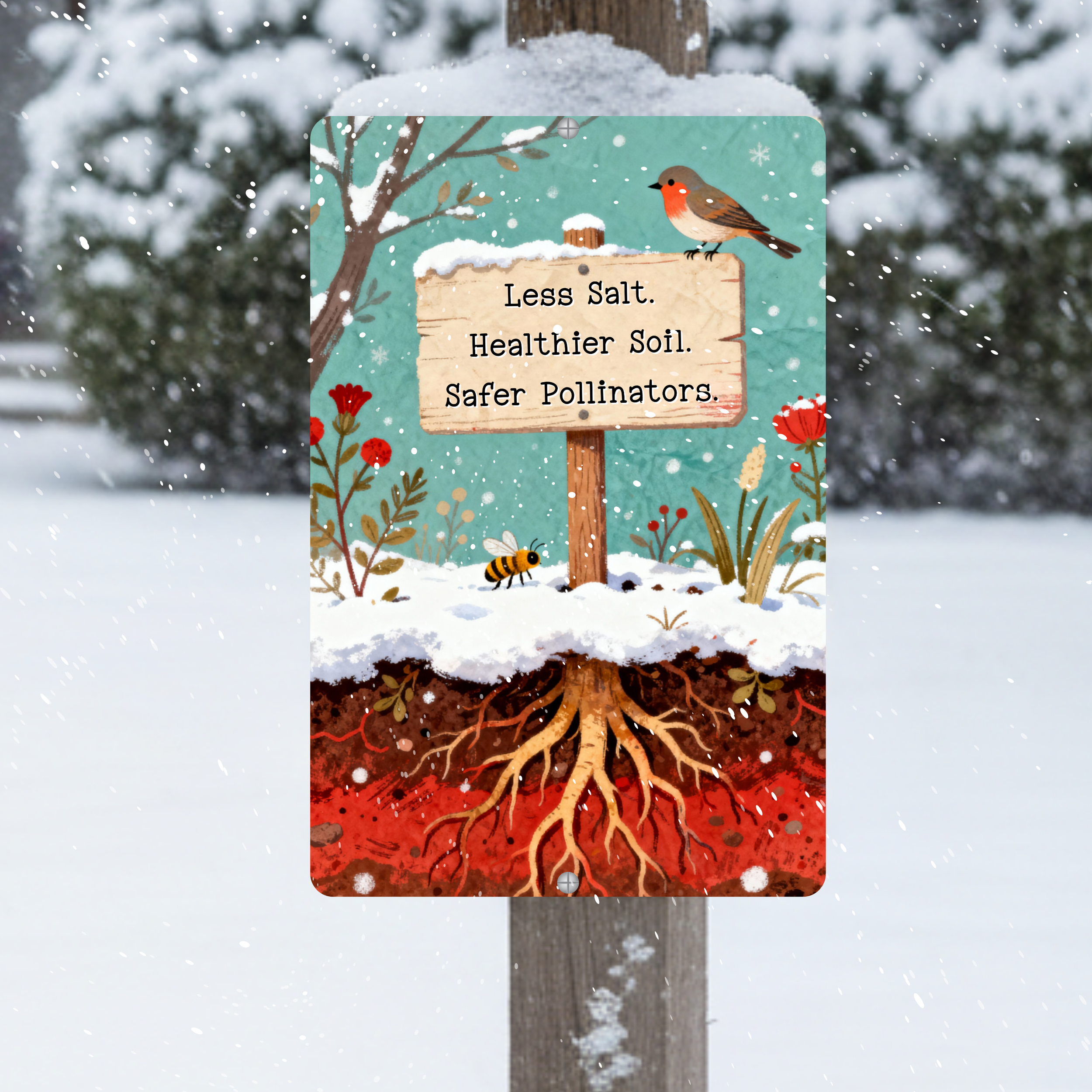

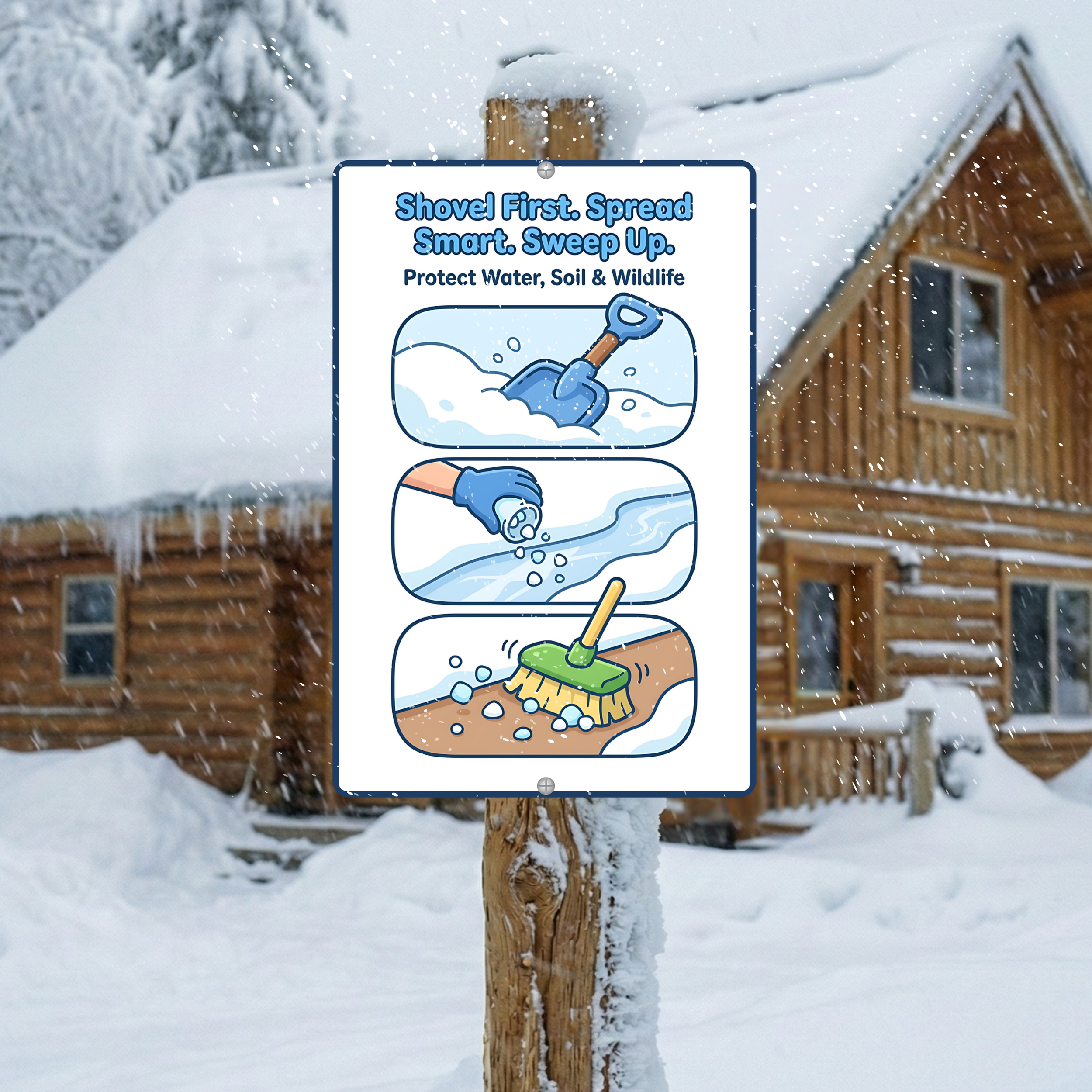
Displaying an eye-catching “Leave the Leaves” sign or similar can make a great impact in educating neighbors and passerbys.
When autumn leaves carpet the ground, resist the urge to rake everything away. Leaf litter is a vital winter refuge for countless beneficial insects and other critters, and it doubles as free fertilizer for your soil. In forests, fallen leaves form a rich layer of organic matter that insulates and nourishes the ground – our yards can mimic this natural cycle. Many butterflies and moths overwinter in leaves at various life stages (egg, caterpillar, chrysalis, or adult), burrowing into the leaf layer for protection from the cold. Important pollinators like bumblebee queens and certain solitary bees also hibernate under leaves or just below the soil surface, relying on that cover to survive until spring. Even other wildlife benefit: salamanders, toads, and other small amphibians find shelter in moist leaf litter, and come spring, birds will forage in the leaves for the insects and caterpillars hiding there. From a soil standpoint, leaves act as a natural mulch – they protect soil from erosion, reduce moisture loss, and as they decompose they return nutrients to the earth, improving soil structure and fertility. By leaving leaves on garden beds or raking them into flowerbeds and under shrubs (instead of bagging them for disposal), you’re enriching your garden and creating critical habitat at the same time. One North Carolina State University analysis put it simply: scientists found that strategically leaving leaves “provides important habitat for overwintering insects and amphibians, returns nutrients to soil, and reduces waste” that would otherwise go to landfills. In short, “leave the leaves” is more than a slogan – it’s an easy, impactful way to support the base of the food web (insects and healthy soil) through the winter months.
Leave Native Plant Stems Standing Through Winter
Garden aesthetics often call for cutting down dead flower stalks in fall, but keeping native plant stems up through winter provides vital ecological benefits. The dried seed heads of coneflowers, sunflowers, grasses and other native perennials are natural bird feeders – in winter, seed-eating birds like finches, sparrows, and chickadees rely on these remnants for nutrition. By not deadheading all your flowers, you’re setting a seasonal table for wildlife. Just as important, the hollow or pithy stems of many native plants serve as winter sanctuaries for insects. Many native solitary bees and other beneficial bugs hibernate inside these hollow stems or in the cavities of twigs. Some bee species even lay eggs in the cut stems, which remain until offspring emerge in spring. Tall grass stalks and shrub branches also catch and hold snow, which can insulate the ground and provide hiding places for small creatures. The guidance from ecological experts is to delay garden cleanup until spring – leave those stems standing through winter, then cut them back to about 15 inches high in early spring (so new growth can take over while still leaving short “stub” habitats). This timing ensures any hibernating bees or butterflies can wake up and depart safely. In summary, a slightly “messy” winter garden – complete with last season’s dried stems and seed pods – is far more than an eyesore; it’s a lifeline for wildlife. Come spring, you can tidy up and still support the next generation of beneficial insects by leaving portions of those stems in place for nesting. Your restraint in autumn will be rewarded by birds feasting in winter and pollinators buzzing in your garden come summer.
Curb Winter Salt Runoff to Protect Waterways
Each winter, countless tons of salt are spread on roads and sidewalks – and much of it eventually washes into storm drains, streams, and lakes. This surge of chloride-laden runoff is wreaking havoc on freshwater ecosystems. Chloride from de-icing salt has been measured at seasonally elevated levels in rivers and groundwater, especially in late winter, and can persist into spring. High salt concentrations in water upset the natural balance: chloride above 230 mg/L can violate water quality standards and harm aquatic life. Excess salt in a lake can prevent normal mixing of water layers, contributing to low oxygen conditions, and it directly poisons freshwater organisms – from tiny zooplankton up to fish and amphibians. For instance, amphibians have trouble regulating their water balance in salty water, and fish experience stress, stunted growth, or even die-offs as chloride rises. The best solution is preventing salt from reaching waterways in the first place, which means using less salt to begin with. Environmental agencies emphasize that using the minimum effective amount of de-icer is the key to minimizing impacts. For individuals, this means only salting critical areas (steps, steep walkways) and not treating every inch of pavement. Always shovel or plow snow early so ice has less chance to form, and break up any ice before deciding if salt is truly needed. If you notice piles of unused salt remaining on the ground after things melt, sweep it up – otherwise spring rains will just carry that excess into the nearest stream. In fact, one Illinois Extension guide notes that if you see leftover salt crystals on dry pavement, you likely applied too much, and sweeping them for reuse prevents that chloride from washing away. Another smart step is keeping salt away from storm drains or gutters; try not to overspread onto the street where municipal runoff will quickly transport it to waterways. By being sparing and strategic with de-icers, homeowners can significantly cut down the salt pollution that ends up in local creeks. Even community efforts like volunteer “chloride watch” programs are gaining traction, where citizens help monitor stream salt levels to inform better road management practices. Keeping winter roads safe and protecting water quality is a challenging balance, but it starts with everyone doing their part to use salt smartly.
Provide Winter Water Sources for Birds and Pollinators
When temperatures plunge, finding fresh water becomes a daily struggle for wildlife. Ponds and puddles freeze solid, yet birds still need to drink and even bathe to keep their feathers in good condition. One of the most helpful things you can do is to offer an unfrozen water source in winter. Something as simple as a backyard birdbath can save lives – if kept ice-free. Many experts recommend using a heated birdbath or a submersible birdbath heater to maintain a liquid water supply outdoors. The water should be shallow (no more than 2 inches) and refreshed frequently to keep it clean. Birds will readily flock to a reliable water source in cold weather, which improves their survival odds in two ways: hydration and hygiene. Drinking water helps them stay hydrated (especially important given the dry winter air), and bathing helps birds keep their insulating feathers clean so they trap heat better. Make sure to position the water near some cover (like shrubs or a brush pile) so birds can dart to safety if a predator appears, but not too close to where cats can hide. Beyond birds, pollinators and other insects also benefit from available water when they become active on warmer days. On mild winter afternoons or during early spring thaws, you might see bees venturing out of the hive – they, too, need water to drink or to rehydrate dried food stores. A shallow dish of water with stones or floating corks (to give insects safe perches) can provide a drink for bees and butterflies on those rare warm winter days. While most native pollinators lie dormant all winter, maintaining a water source year-round ensures that whenever temperatures allow, any thirsty critter can find a sip. Just remember to keep the water fresh and not let it completely freeze over. In summary, water is often the forgotten element of winter wildlife support – we tend to focus on food – but biologists note it can be even more crucial. An open, clean water source in winter “can be a huge benefit to birds,” according to state wildlife agencies, and it’s one backyard addition that requires little effort but yields immediate dividends for animal welfare.
Create Winter Habitat – Without Overfeeding Wildlife
It’s natural to feel compassion for wild creatures in harsh weather, but feeding wildlife improperly can do more harm than good. The goal is to support animals with habitat and natural food, rather than making them dependent on artificial feeding that can lead to disease or dangerous behavior. For example, feeding deer in winter is strongly discouraged by wildlife experts. Well-meaning people often put out corn or hay for deer, not realizing this can make deer vulnerable to starvation, predation, and collisions. The New Hampshire Fish & Game Department warns that deer fed at artificial feeding sites expend precious energy traveling to the food, congregate in unnaturally large groups (spreading disease and attracting predators), and can even suffer fatal digestive problems because their stomachs can’t adjust quickly to a new food source. In short, “wild animals are supposed to live on wild food,” as one conservationist put it. Instead of hand-feeding deer, focus on providing good winter cover and native food sources: if you have space, leave some evergreen thickets or wooded areas untouched so deer and other wildlife can find shelter from wind and snow. Similarly, avoid leaving out kitchen scraps or excessive birdseed that might attract rats, raccoons, or other unwelcome wildlife to your home. Bird feeding is a popular winter activity, and it can be beneficial if done responsibly – but even birds should not be “overfed” to the point of dependence. Use bird feeders as a supplement to natural foraging, not a sole food source. Offer high-energy foods like black-oil sunflower seeds, suet, and peanuts to help birds get through cold nights, but keep feeders clean (to prevent disease) and don’t scatter more food than birds can finish in a day. This prevents spoilage and avoids drawing large pest populations. Also consider “feeding” birds and other wildlife by planting native berry bushes and fruit trees that hold their fruits into winter – species like winterberry holly, crabapple, and juniper provide nutritious berries for birds long after the first frost, with no risk of spreading disease or altering animal behavior. And don’t forget brush piles and roost boxes: by piling fallen branches in a corner of your yard, you create natural cover where songbirds, rabbits, or even overwintering butterflies can hide from predators and harsh weather. These structural habitats cost nothing and satisfy wildlife needs without any feeding. In summary, strive to support wildlife through habitat enrichment rather than handouts. Let wild animals forage on the foods their bodies are adapted for, and provide safe winter shelter in your landscape. You’ll help them survive winter in a healthy way, and you’ll avoid the unintended negative outcomes of overfeeding.
Advocate for Eco‑Friendly De-icing in Your Community
Individual actions go a long way, but community-level changes can multiply the benefits for the winter environment. One powerful step is to advocate for your town, city, or local contractors to adopt greener snow and ice management practices. Many municipalities are already exploring ways to cut down on road salt pollution while keeping roads safe. For instance, Rhode Island’s transportation department began pre-treating roads with salt brine years ago, a technique known as anti-icing, which prevents ice from bonding and significantly reduces the total salt needed during a storm. New Hampshire has a voluntary certification program called “Green SnowPro” that trains snowplow operators in salt reduction best practices, like calibrating spreaders and using weather-specific application rates. As a resident, you can encourage your public works department or local government to send crews to such trainings or to implement similar standards. Urge local officials to try eco-friendly deicers on city sidewalks and parking lots – products like calcium magnesium acetate or sand mixtures might be suitable for municipal use in sensitive areas (parks, near streams) to minimize environmental harm. You might also support city ordinances that require commercial parking lot maintenance companies to use best management practices for salt (for example, clearing snow promptly and only using justifiable amounts of deicer). When enough citizens voice concern about salty streams and dying roadside trees, leaders listen. Get involved by attending town meetings or writing to your county road commission about this issue – cite the science and underscore that excess road salt costs millions in infrastructure damage and environmental cleanup. Additionally, consider participating in or starting a “winter salt watch” in your community: groups in several states (often in partnership with environmental agencies or universities) have organized volunteers to monitor chloride levels in local water bodies and raise public awareness. The data collected can spur policymakers to adjust salt application practices. In short, be a voice for smarter salting policies. Whether it’s campaigning for your city to invest in better snowplow technology, or simply spreading the word to neighbors about eco-friendly ice melt, community advocacy amplifies the impact of individual actions. Together, residents can help shift the default from “more salt is better” to “as little salt as necessary” – benefiting freshwater, wildlife, and budgets alike.
Winter doesn’t have to be a dead zone for environmental stewardship. By implementing these practices – from using safer deicers and conserving leaf litter to providing water and habitat – individuals can greatly reduce winter’s ecological footprint and even help local wildlife thrive. The common thread is thoughtfulness: recognizing that our winter habits (like salting, raking, or feeding animals) ripple through the ecosystem. Instead of viewing winter as a time to conquer nature with chemicals and cleanup, we can adopt a restorative mindset that works with natural processes. Small changes, like leaving a flower stalk uncut or clearing snow before reaching for salt, add up to healthier soils, cleaner waterways, and stronger bird and insect populations. As you advocate for greener community practices, you also set an example in your own yard. Embracing these responsible winter habits not only protects the environment – it reconnects us with the rhythms of the season. Even in the cold and snow, there are opportunities to sustain life around us, and by doing so we ensure a more vibrant and balanced ecosystem once spring arrives. Winter stewardship is all about giving back to nature during its hardest months, with the reward of a flourishing, resilient environment in return. Let’s all do our part this winter to support the web of life under the snow.
Sources:
U.S. Environmental Protection Agency – Impacts of Road Salt and Freshwater Salinization epa.govepa.gov
Penn State Extension – Road Salt Pollution and Environmental Effects extension.psu.edu (via PSU Extension)
University of Minnesota Extension – Effects of Deicing Salts on Landscapes extension.umn.eduextension.umn.edu
University of Delaware Extension – Winter Salt Damage to Landscapes sites.udel.edusites.udel.edu
EPA (New England) – “Winter is Coming! Tons of Salt on our Roads” epa.govepa.gov
University of Illinois Extension – Smart Salting Practices extension.illinois.eduextension.illinois.edu
Connecticut DEEP – Road Salt FAQs portal.ct.govportal.ct.gov
North Carolina Cooperative Extension – Fall Leaf Litter for Pollinators & Soil newhanover.ces.ncsu.edunewhanover.ces.ncsu.edu
Missouri Extension – Leaving Leaves for Pollinators extension.missouri.eduextension.missouri.edu
University of New Hampshire Extension – Leaving Leaves and Stems for Wildlife extension.unh.eduextension.unh.edu
Alabama Extension – Benefits of Leaving Leaves (wildlife) aces.eduaces.edu
New Hampshire Fish & Game / UNH Extension – Why Not Feed Deer extension.unh.eduextension.unh.edu
Illinois Extension – Managing Winter Landscape for Wildlife extension.illinois.eduextension.illinois.edu
University of New Hampshire Extension – Caring for Birds in Winter extension.unh.edu
U.S. Fish & Wildlife Service – Winter Bird Bath Advice fws.gov and public domain image of heated birdbath