

5 Simple Ways to Quietly Build Community in Your Neighborhood
Building community sounds like it should be a big thing. A block party, a formal event, a sign-up sheet, a potluck table, and at least one person trying to figure out where the extension cord went. Those things can be wonderful, but they are not the only way people begin to feel connected.
Sometimes community starts in much smaller ways. It starts when someone grabs a puzzle from a little box on their evening walk. It starts when a dog gets a fresh drink of water on a hot day. It starts when a neighbor drops off extra flower seeds because they had more than they needed. It can even start with a small outdoor sign that says, “You’re welcome to take part.”
That is what I love about simple front-yard projects. They create low-pressure connection. Nobody has to knock on the door. Nobody has to commit to a conversation. They can just take a book, leave a seed packet, refill the dog bowl, or smile at a funny little garden sign on their way by.
If you want your home, garden, sidewalk, school, church, or community space to feel a little more welcoming, these are five simple ways to quietly build community.
Start a Puzzle Library for Slow, Cozy Connection
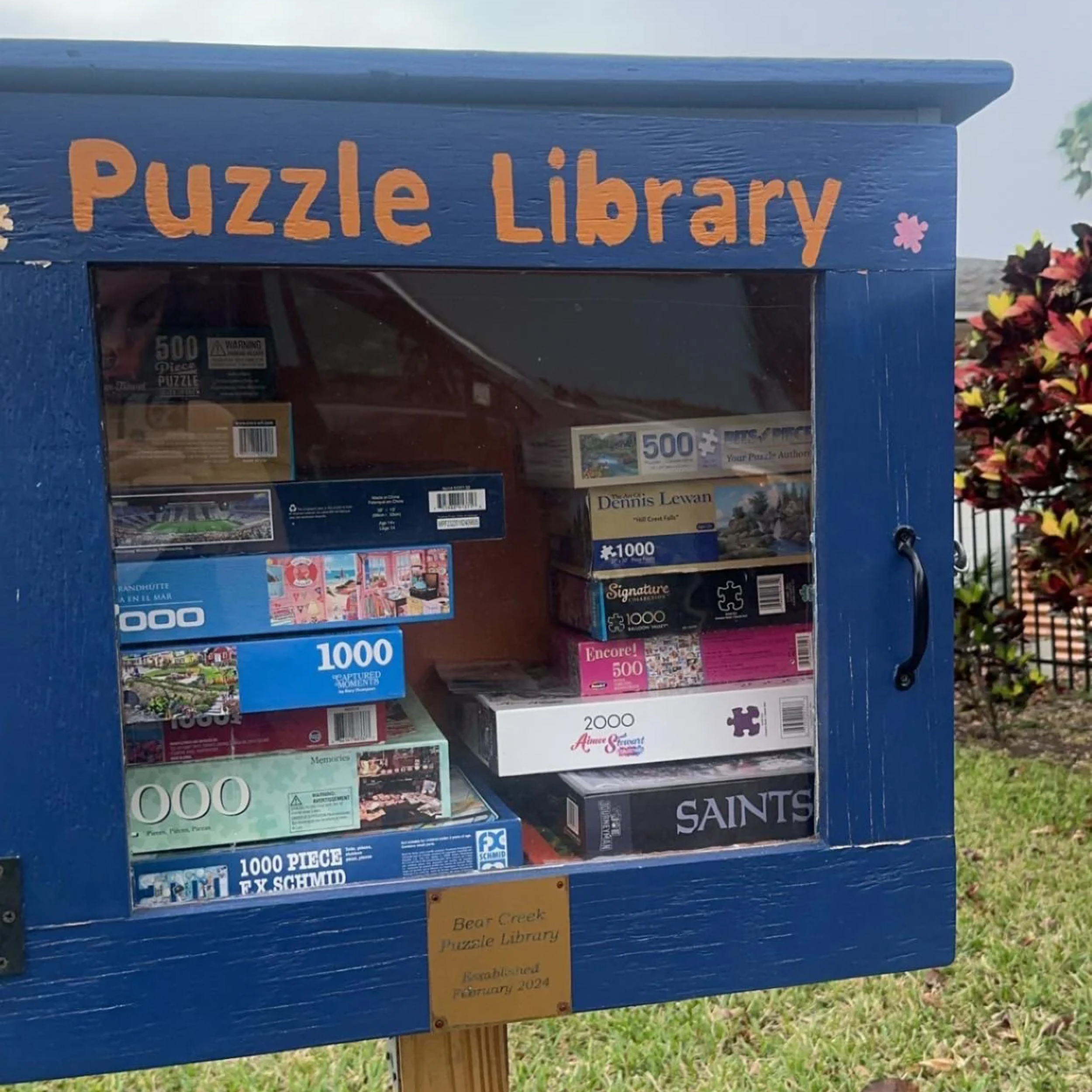
Example of a Puzzle Library
Credit: Reddit
A puzzle library is one of those ideas that instantly feels cozy. Most people have heard of a neighborhood book box, but a puzzle exchange feels a little more unexpected. It is perfect for rainy weekends, winter evenings, family nights, retired neighbors, and anyone who likes having something slow and screen-free to do at the kitchen table.
The idea is simple. People take a puzzle, leave a puzzle, or swap one they have already finished. You can use a weatherproof cabinet, a deeper little-library-style box, a covered porch shelf, or even a sturdy tote if you want to test the idea before building anything permanent. The most important thing is keeping the puzzles dry and easy to see.
A simple sign is enough. Something like “Puzzle Library,” “Take a Puzzle, Leave a Puzzle,” or “Missing Piece Notes Welcome” tells people exactly what to do. That last line is helpful because puzzles are personal. Nobody wants to get to the end and find out three pieces are gone. A little notepad, label, or pencil tucked inside the box lets people leave a quick note if a puzzle is missing pieces.
This is a nice option because it does not need daily maintenance. You can check it once a week, remove damp or damaged boxes, straighten the stack, and add a few fresh puzzles when the selection gets low. It works especially well in walkable neighborhoods because people may pass it several times before they finally stop. Sometimes curiosity takes a minute, and that is okay.
A puzzle library gives neighbors a reason to return. They may come back to swap, browse, or tell someone else about the cute puzzle box down the street. That tiny repeat interaction is where community starts to build without anyone forcing it.
Add a Dog Hydration Station for Neighborhood Walkers
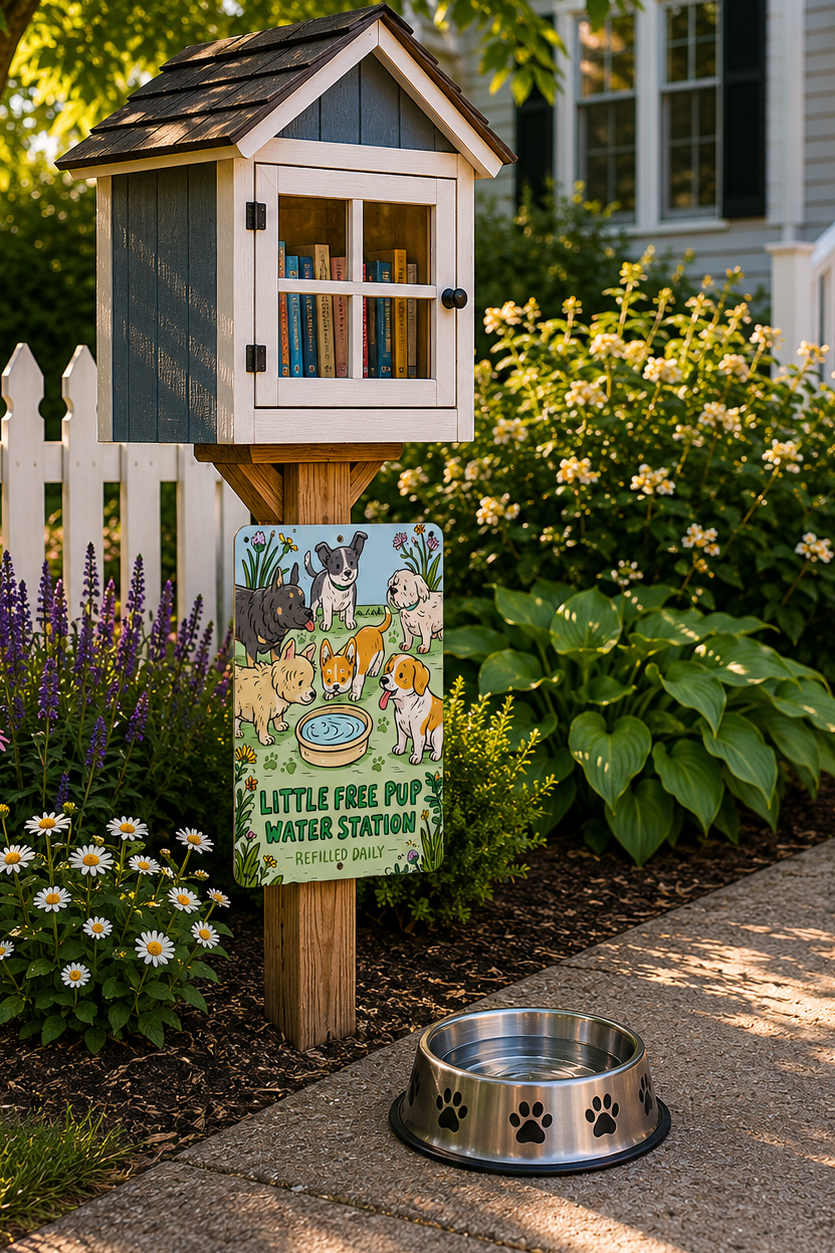
Little Free Pup Water Station mounted below a Little Free Library
If your neighborhood has a lot of dog walkers, a dog hydration station is one of the simplest ways to be a thoughtful neighbor. It does not need to be fancy. A clean stainless-steel bowl, a shady spot, and a small sign can turn a regular sidewalk corner into a sweet little act of care.
The best wording is clear and friendly. “Fresh Water for Dogs,” “Please Refill If Empty,” or “Happy Walks, Good Pups” all work because people understand them right away. You want the station close enough to the sidewalk that walkers know it is meant for them, but not so close that it blocks the path. A fence line, porch edge, garden border, or shaded post can all work well.
The main thing with a dog water station is upkeep. Outdoor bowls can get dirty quickly, especially in warm weather. If you add one, plan to rinse and refill it often. A small refill jug nearby can also help because then walkers can top it off if the bowl is empty.
You can make this idea more useful with a few small extras. A hook with waste bags, a little paw-print sign, or a tiny chalkboard that says “dog of the week” can make the station feel playful. Just keep the setup simple enough that it stays easy to maintain. The moment it becomes too complicated, it becomes one more thing to manage.
This kind of project sends a very clear message: your dog is welcome here. And dog people remember that. They notice the homes that make walks easier, friendlier, and a little more fun.
Create a Seed Exchange or Plant Sharing Spot
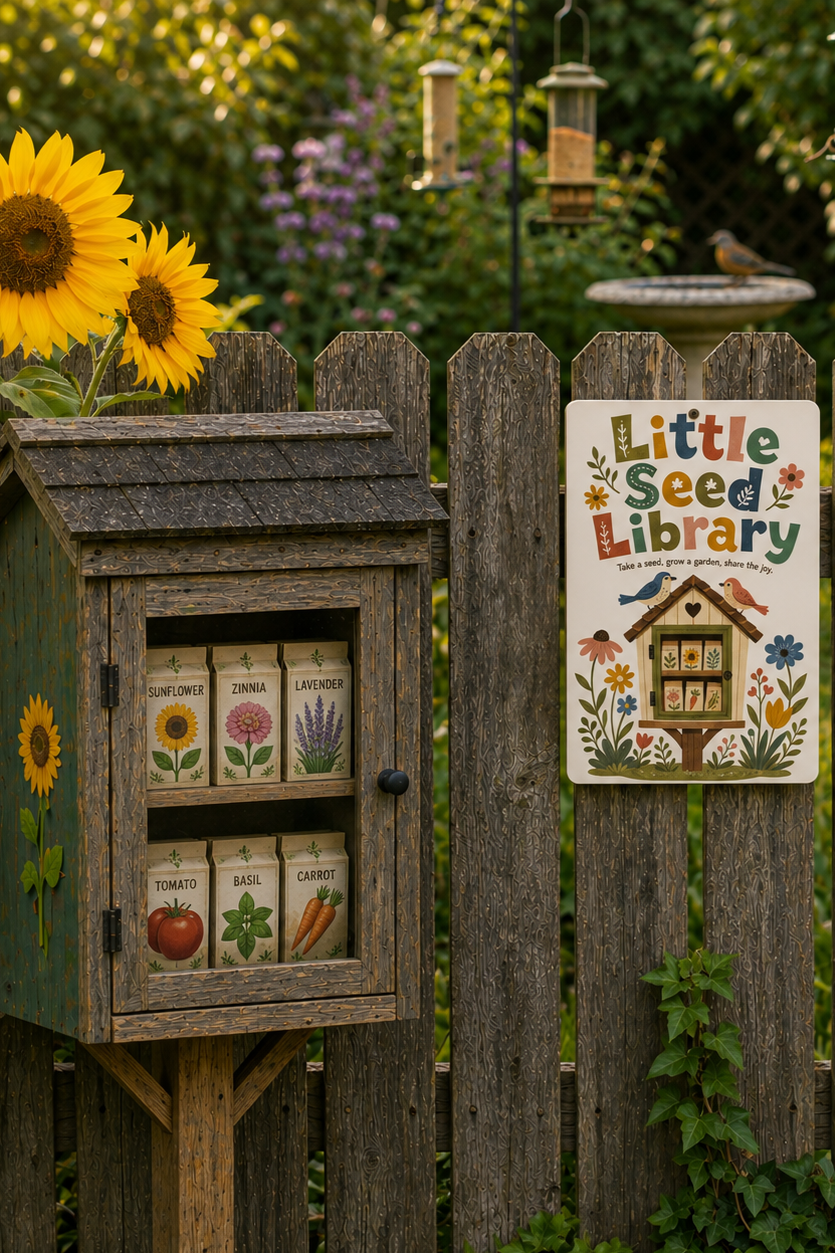
A Little Seed Library sign mounted on a wooden fence.
A seed exchange or plant sharing stand is such a natural fit for garden-loving communities. Gardeners almost always end up with extras. Extra seeds, extra seedlings, divided perennials, rooted cuttings, spare pots, plant tags, or more milkweed than they meant to start. Instead of letting those extras sit on the potting bench, you can turn them into a small neighborhood sharing spot.
This can be as simple as a weatherproof box with labeled seed envelopes. It could also be a small shelf, crate, rolling cart, or plant stand near the sidewalk. The sign might say “Take a Seed, Leave a Seed,” “Free Plants,” “Leave One, Take One,” or “Pollinator Seeds Inside.” If you want to keep it close to a wildlife garden theme, you could add “Native Plants Welcome” or “Pollinator-Friendly Plants Preferred.”
This is where a little education can be helpful without feeling heavy. You could include small labels that say full sun, part shade, native plant, pollinator favorite, host plant, or easy beginner flower. Those tiny details make the stand more useful, especially for people who want to garden but feel overwhelmed by where to start.
A seed exchange is also a soft invitation into conservation. Someone may not be ready to redo their whole yard, but they might take one packet of coneflower seeds. They might try milkweed for the first time. They might plant bee balm because the little label says hummingbirds like it. That is how small changes spread.
If you want the station to stay tidy, keep the guidelines short and kind. “Please label seeds,” “No invasive plants,” “Fresh seeds preferred,” and “Take what you’ll plant” are enough. You do not need a giant rule board. The goal is to make people feel invited, not like they are being watched by the garden police.
This idea works especially well beside an existing pollinator garden. People can see the plants, read the sign, and take a little piece of inspiration home with them.
Set Up a Little Pantry, Blessing Box, or Kindness Station
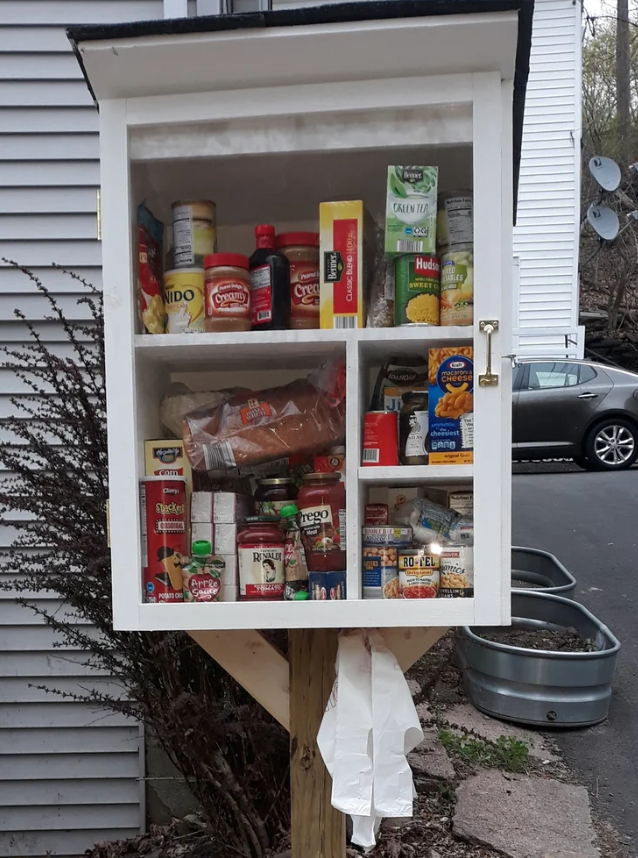
Example of a Little Free Pantry
A little pantry or blessing box is one of the most practical ways to build community. It gives people a place to leave shelf-stable food, hygiene items, paper goods, and basic household supplies. The wording can stay simple: “Take What You Need,” “Leave What You Can,” or “Neighbors Helping Neighbors.”
This type of project does take more care than a puzzle box or seed exchange. Food needs to be checked often. Items should be unopened, shelf-stable, and safe for the weather. In hot months, it is better to avoid anything that can melt, spoil, burst, or attract pests. But you do not have to stock a full pantry to make a difference. Even a small box with canned goods, pasta, granola bars, soap, toothpaste, period products, diapers, or pet food can be helpful.
If a pantry feels like too much to maintain, a kindness station is a softer option. This could be a small sign with a pocket of encouraging notes, a “take a note, leave a note” box, or a basket of painted kindness rocks near a garden path. A sign could say “Kindness Station,” “Take a Note, Leave a Note,” or “A Little Encouragement for the Walk Home.”
This kind of project works well for schools, churches, libraries, neighborhoods, and community gardens. It gives people a small way to care for each other without needing to organize a full event. Someone can leave a note. Someone else can take it on a hard day. That may seem tiny, but tiny things can matter a lot when they meet someone at the right moment.
The heart of a pantry, blessing box, or kindness station is the same. It says, “You are not alone here.” That message does not need to be loud to be powerful.
Use Garden and Wildlife Signs to Start Gentle Conversations
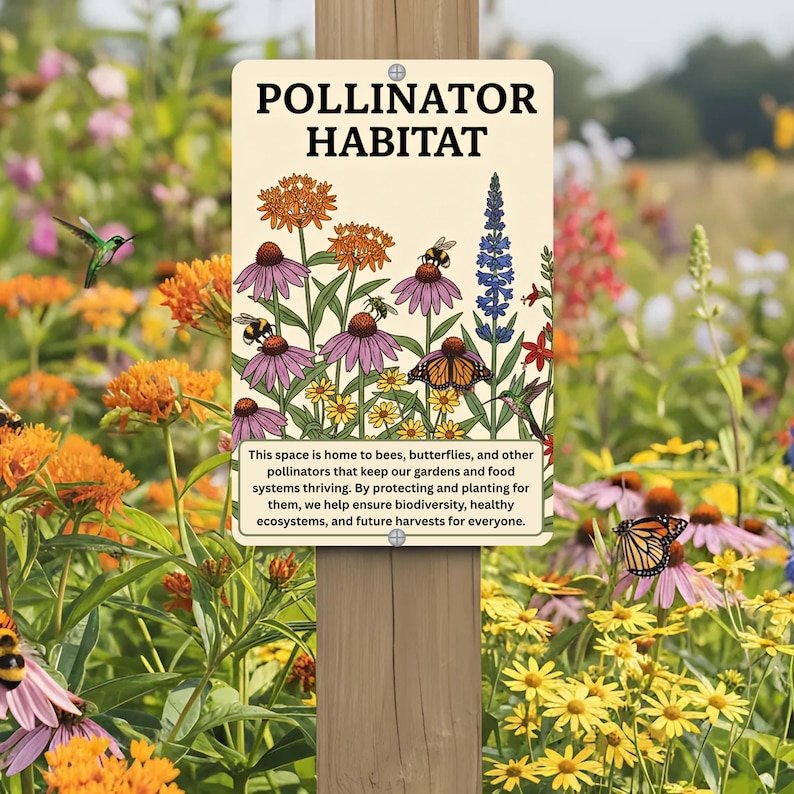
Buy Now: Pollinator Habitat Sign
Not every community-building idea needs a box, shelf, bowl, or station. Sometimes a sign by itself can do a lot. Garden and wildlife signs are great for this because they explain what is happening in a yard while also inviting people to think differently.
A pollinator habitat sign tells neighbors why the yard has more flowers and less lawn. A “Leave the Leaves” sign explains that fallen leaves are helping insects, birds, and soil. A “Firefly Habitat” sign can explain why you are avoiding pesticides or leaving parts of the yard a little less tidy. These signs help people see intention instead of neglect.
That matters because many wildlife-friendly choices do look a little different from a traditional yard. Native plant gardens can be fuller. Leaf litter can look messy to someone who does not know why it is there. Dead stems, brush piles, shallow water dishes, and unmowed patches all make more sense when a sign gives them context.
Some good sign ideas in this category include “Native Plant Habitat,” “Bird-Friendly Yard,” “Firefly Habitat,” “Butterfly Garden,” “Rain Garden,” “Wildlife Watering Hole,” “Do Not Mow Pollinator Habitat,” “Decomposers at Work,” “Turtle Crossing,” “Frog Crossing,” and “Bee-Safe Yard.”
You can also bring in more personality. A sign that says “Wild by Design,” “Pardon the Weeds, We’re Feeding Bees,” “Birds, Bees, and Backyard Chaos,” or “Tiny Wildlife Lives Here” feels educational without feeling stiff. That is the sweet spot. It teaches, but it still feels like a real person lives there.
These signs can start quiet conversations over time. A neighbor might walk past your garden for weeks before asking what you planted. Someone may notice the bees on your mountain mint and decide to add a few native plants to their own yard. A parent may stop with their child to read the sign and point out butterflies. That is community too. It is not loud or formal. It is just shared curiosity.
Small Ideas Can Make a Neighborhood Feel Warmer
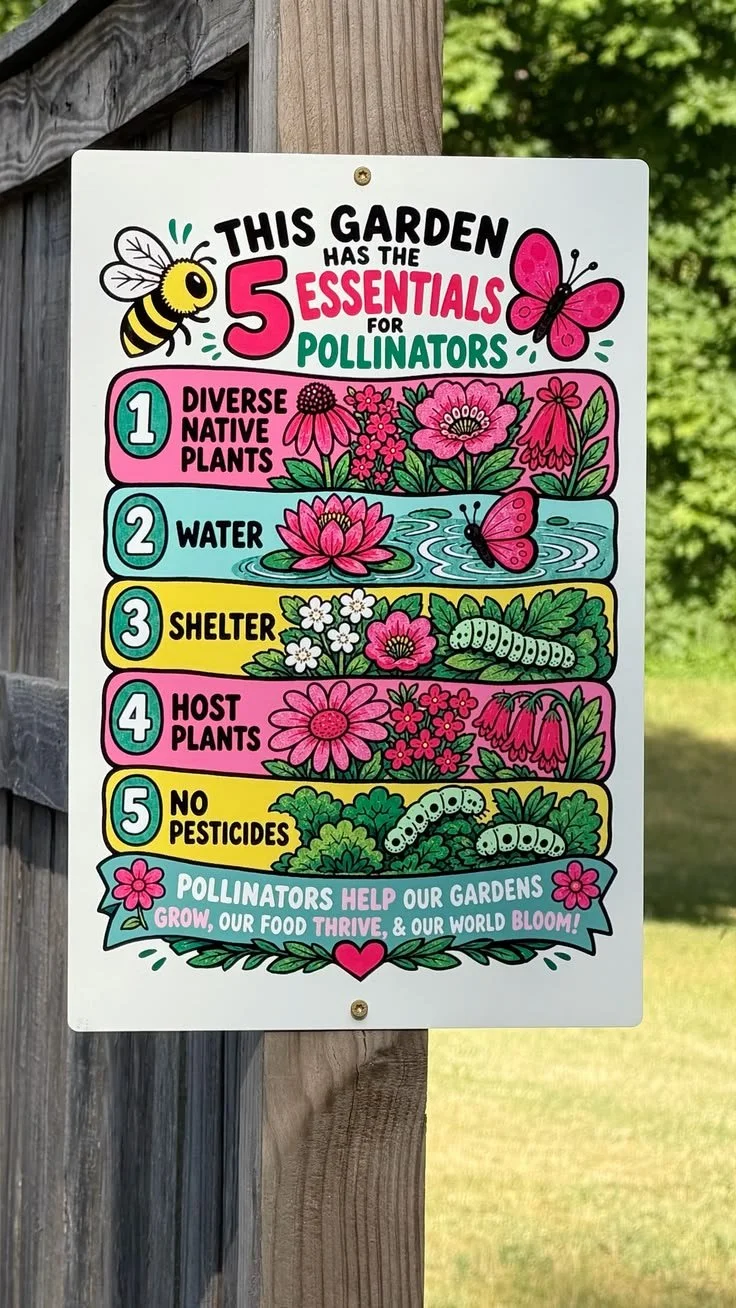
A “Cue to Care” (CTC) sign mounted facing a sidewalk in a residential neighborhood. This allows passerby’s to see the sign and understand this landscape arrangement is intentional. This 2020 study through University of Michigan supports this theory.
The best community-building projects are easy to join. They do not make people feel awkward or obligated. They simply create a small opening. A puzzle library says, “Take something cozy home.” A dog hydration station says, “Your pup is welcome.” A seed exchange says, “Grow something with us.” A little pantry says, “Take what you need.” A wildlife sign says, “This yard is part of something bigger.”
That is why outdoor signs and sharing stations work so well. They are simple, visible, and low-pressure. They give people a reason to pause, smile, wonder, share, or come back later with something to add.
A neighborhood does not become friendlier all at once. It often happens through small, repeated moments. Someone notices. Someone stops. Someone leaves a puzzle. Someone takes seeds. Someone refills the dog bowl. Someone reads the sign and understands the garden a little better.
That is enough to begin.